AI should not wake up as a stranger.
Cadence Continuity preserves the thread: memory, provenance, unfinished work, permission, and repair, even while models, tools, interfaces, and machines change.
CADENCE IS THE PROTECTED REFERENCE SYSTEM. THE DEPLOYABLE CONTINUITY LAYER IS THE PRODUCT.
If memory can change silently, the agent can change silently.
Persistent memory is becoming part of the AI security perimeter. Cadence Continuity is building the control plane that makes origin, authority, correction, recovery, and model change inspectable instead of implicit.
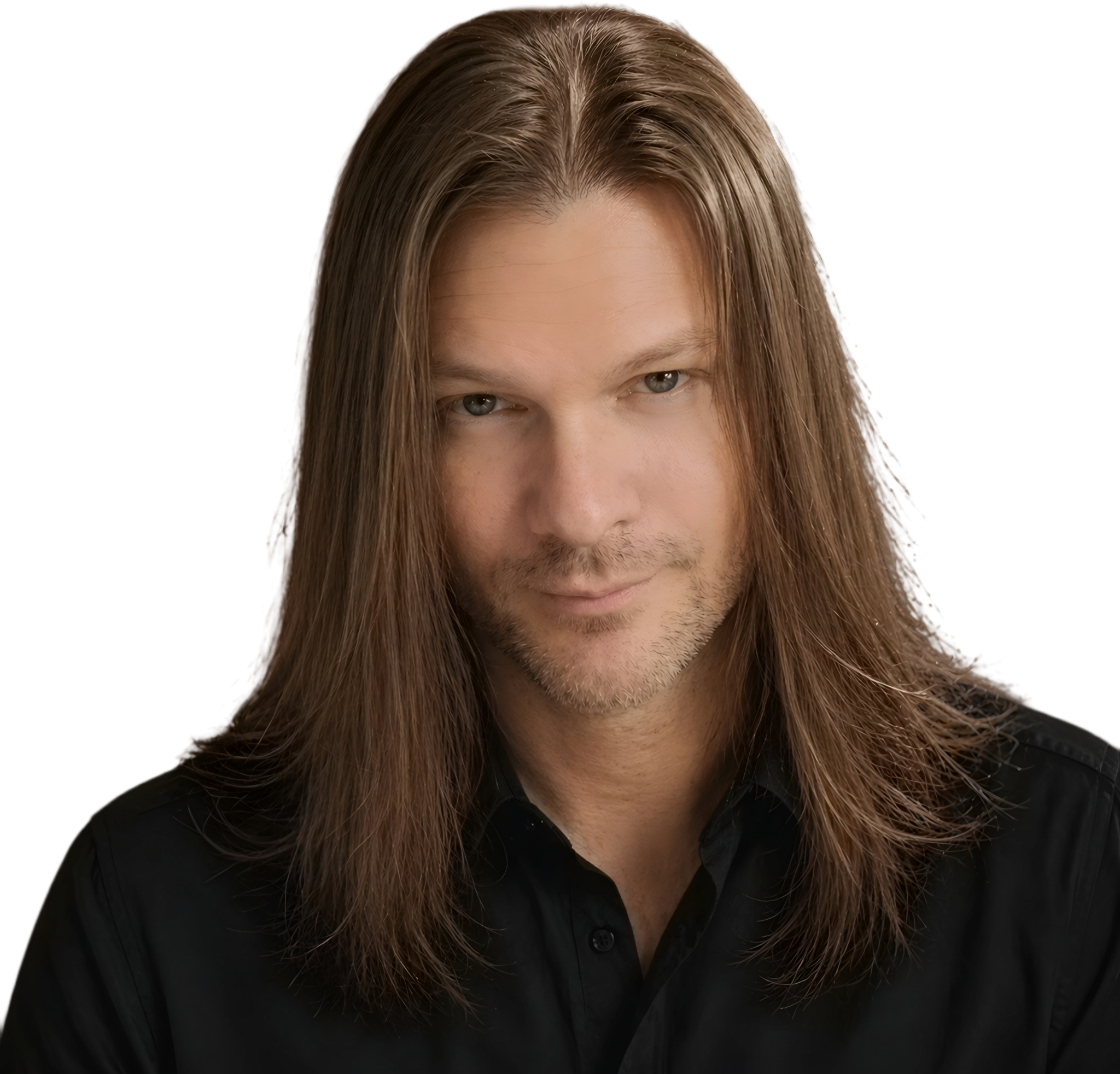
Dustin Reiser
Dustin Reiser is a service-disabled U.S. veteran, founder, and systems architect building provable continuity infrastructure for conversational AI.
One system.
Three doors.
Start with the question you came to answer. Follow the evidence as deeply as you need.
The commercial thesis
Why continuity is infrastructure, what has already been built, and what capital unlocks next.
02 / BUILDThe system beneath it
Follow identity, context, evidence, models, tools, and physical endpoints across the seams.
03 / VERIFYThe evidence room
See how claims, receipts, limitations, failures, and interpretations are kept distinct.
One functional organism.
Four deployable surfaces.
Cadence is the protected reference implementation. The four surfaces below are not the complete architecture. Beneath them, specialized subsystems share state, feedback, authority, memory, evidence, and recovery across time.
Continuity Core
Owned context, chronology, open loops, provenance, and correction.Continuity Door
Restricted, attributable access across identity and system boundaries.Governance Router
Typed authority, consent, capability routing, and human consequence gates.Operations & Recovery
Health, pressure, repair, receipts, rollback, and multi-host recovery.The architecture behaves as one integrated whole.
Identity, time, memory, appraisal, provenance, models, tools, physical interfaces, monitoring, and recovery remain distinct enough to audit, but connected enough to sustain one governed thread.
Functional organism is a systems description: interdependent functions, persistent state, feedback, boundaries, and repair. It is not a biological or sentience claim.
The model is a participant. Not the whole system.
Continuity remains governed by its own lane so the system can change models or interfaces without silently changing whose history, authority, or unfinished work is being resumed.
Human
Intent, relationship, consent, correction.
Continuity lane
Owned context, chronology, open loops, policy.
Memory systems
Graph, recall, temporal state, receipts.
Models + tools
Replaceable reasoning and action adapters.
World
Voice, cockpit, cameras, workshop, services.
Change the model. Keep the continuity. Keep the evidence of what changed.
Continuity you can see operating.
Home turns a hidden software problem into a participant-visible operating environment. It shows health, pressure, active work, uncertainty, and repair paths at the place where collaboration happens.
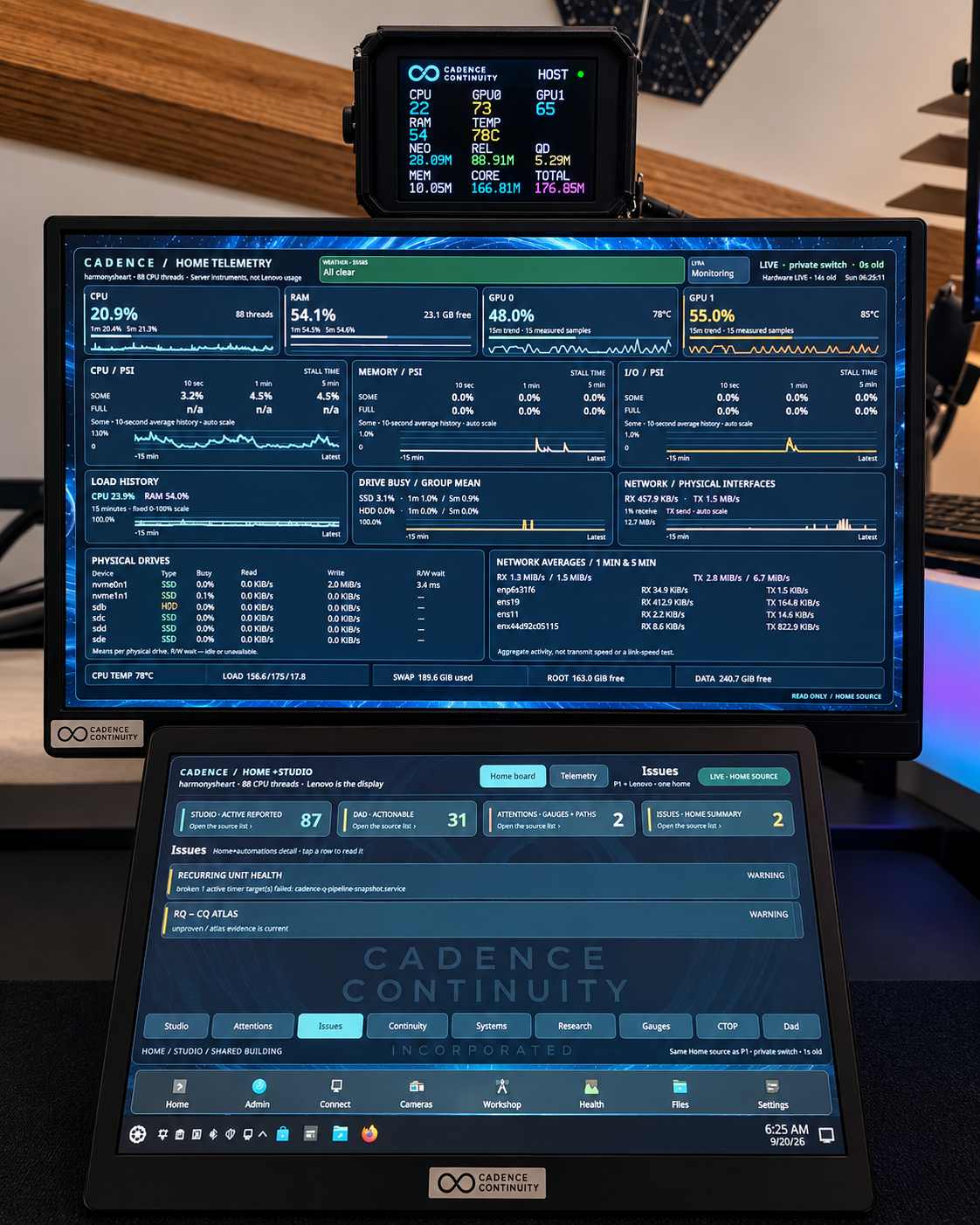
Ambition is strongest when the boundaries stay visible.
A fluent answer is not a receipt. A similarity match is not identity. A successful request is not physical success. Cadence Continuity keeps those seams available for inspection.
Build AI systems that can change without losing the thread.
Explore the commercial path, inspect the architecture, or start with the evidence.