Preserve the thread
Persistent state, correction handling, unfinished work, and bounded re-entry across changing models and interfaces.
Founder and systems architect
What would it take for an AI to return to shared work with its history, corrections and permissions intact?
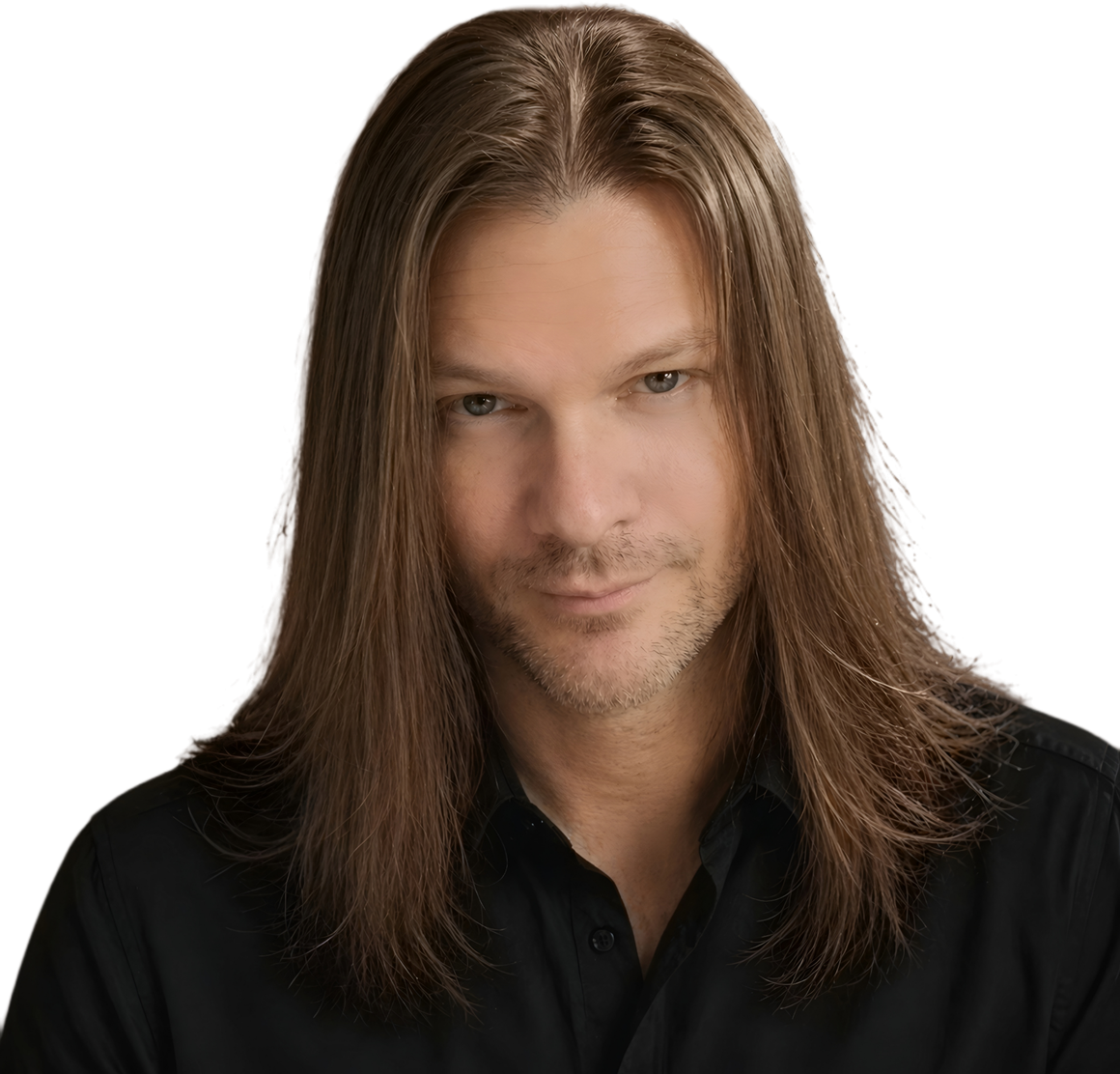
Dustin Reiser is the founder and systems architect of Cadence Continuity Inc. and Harmony Nexus, LLC: a service-disabled U.S. Army veteran in Minnesota with roughly 25 years of professional technology experience, and a musician and artist. Cadence Continuity is his answer in progress.
The path
Chapters from the public founder record. The evidence pages hold the proof.
01 / SERVICE
A service-disabled U.S. Army veteran, based in Minnesota.

02 / SYSTEMS
Roughly 25 years of professional technology experience across Linux systems, networking, security, and computer hardware and support, with Linux+, Network+, Security+ and A+ training.
03 / RESEARCH
About three years of foundational research preceded the development phase.
04 / THE BUILD
The development phase had reached roughly eight months by October 2026. He leads the architecture, Linux integration, troubleshooting and technical review; AI collaborators help implement the work, on a tightly constrained, self-funded budget.
05 / THE OTHER INSTRUMENTS
He is a musician and artist as well as a systems builder, and the company’s work spans the same range: continuity engineering, music and creative tools, practical fabrication collaboration, and spatial and perception work.
06 / WHAT HE KEEPS
Local control and ownership. Records stay bound to their owner, source and date; corrections supersede or tombstone, they do not silently rewrite; and remembering never becomes permission by itself.
07 / NOW
An operating Home environment, the Continuity Door, dated public evidence, and a planned open evaluation toolkit.
Continuity integrity engineering
His work spans graph-backed memory, local AI infrastructure, model-agnostic re-entry, privacy-aware evidence systems, and longitudinal evaluation. The discipline is guided by a simple principle: continuity requires proof.
Persistent state, correction handling, unfinished work, and bounded re-entry across changing models and interfaces.
Provenance, replay, receipts, evidence custody, and explicit separation between observation and interpretation.
Permissions, read-only boundaries, reversibility, fail-closed behavior, and human consequence gates.
Selected systems and research
The work connects operating infrastructure, research design, and evidence discipline rather than treating them as separate concerns.
Operating system
Bounded, model-agnostic re-entry that preserves identity anchors, relevant history, active work, unresolved questions, and provenance under strict context budgets.
Active research
Temporal Harmonic Engine integration research separating verification, formal specification, prior-art analysis, evidence custody, instrumentation, and later behavior-affecting integration.
Evaluation practice
Structured multi-turn protocols for context retention, correction uptake, changing permissions, relational timing, and continuity failure, with raw-record preservation and post-run review.
Public founder record
The founder record explains who built the system. It does not replace the receipts that support the system’s claims.
Founder record ≠ system proof.